

Adopted 2023-2050 RTP: Explore Forces and Policies
The future – it’s coming. And what will it bring with it? What will happen to where and how people live, work, and play? And how will these changes affect communities economically and physically?
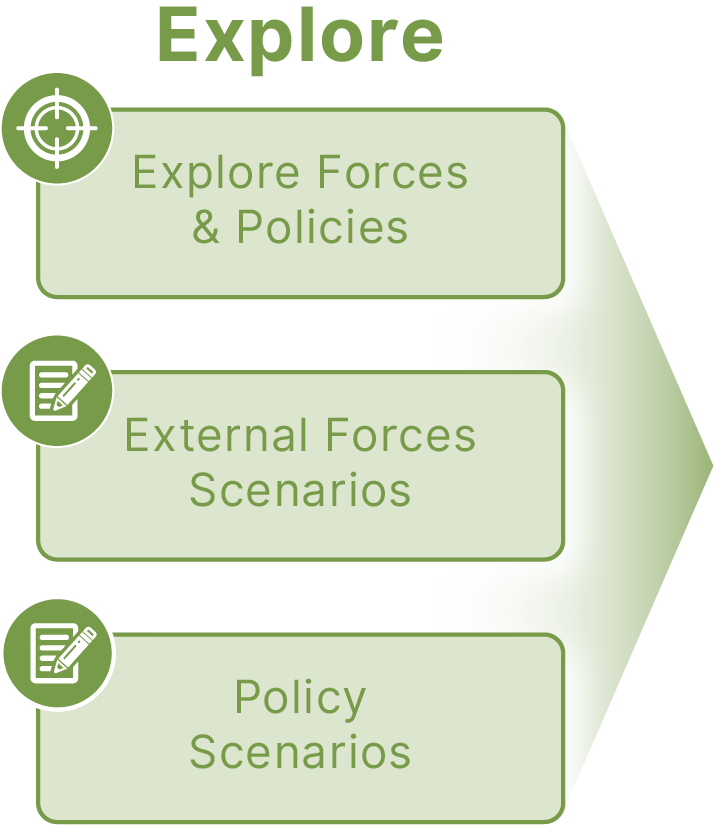
The WFRC began the 2023-2050 Regional Transportation Plan (RTP) process with a focus on exploring and understanding external forces (market shifts, transportation technologies, and policy approaches) that would impact our transportation, land use, and economic development decisions. The intent of this approach is to elevate the discussion of these planning uncertainties and understand these changes as a Region.
Following initial research and literature review, WFRC compiled a list of over 20 topic areas of external forces and policies that were presented to and discussed with peer groups. The peer groups were grouped by topic (active transportation, local communities, transit and on-demand travel, and roadways) and consisted of staff from local governments, agencies, and businesses whose work is directly tied to, or may be heavily influenced by, the identified forces. The purpose of the peer groups was to hold space for meaningful dialogue on the identified influences and policies, develop consensus on which external forces were important to address, approximate the range of impacts from these forces, and determine whether these influences and policies should be tested through simulated scenarios. Each peer group meeting included a discussion of each force as well as a poll asking each participant how impactful they believed each force would be in the future. WFRC used these discussions and polling results to inform and guide the 2023-2050 RTP planning process.
External Forces & Forward-Thinking Policies
External forces are transportation technologies and shifts in market and consumer demand that may impact transportation, land use, and economic development decisions. To prepare the Region and be more resilient to uncertain future changes, WFRC identified 11 initial external forces. These 11 external forces were refined to six key forces that WFRC considered for the 2023-2050 RTP with COVID-19 recovery was also considered as an overarching external force.
Connected and Autonomous Vehicles
High-Tech Transit Systems
High-tech transit systems utilize technology within their fleet. Often utilizing the Intelligent Transportation System (ITS) to become more efficient through Transit Signal Priority (TSP), Traffic Signal Coordination (TSC), and other technologies. These advances in transit technology improve the reliability of transit systems which can lower wait times and overall transit times. Additionally, high-tech transit systems can be integrated with AV technology to optimize transit and provide a greater degree of first/last-mile connections.
Micro-Mobility and E-Bikes
Micro-mobility refers to the use of lightweight devices that are typically used for shorter-distance transport. These can include electric assisted bicycles (e-bikes), electric scooters (e-scooters), and other mobility devices that have improved electric motor technology. The use of micro-mobility and e-bikes decreases parking demand in dense urban cores and may replace some vehicle trips. However, investments and maintenance of infrastructure and proper curb management are required for successful adoption.
On-Demand Travel and Sharing Services
The use of a mobile application that enables users to call/secure individual and shared transportation services. TNC services such as Uber and Lyft impact transportation choices and in some cases may decrease public transit ridership.
E-Commerce and Delivery
E-commerce and delivery refer to a series of changes that are occurring in the way people purchase goods and how those goods are delivered. These include, but are not limited to, internet shopping, food delivery, truck automation and platooning, and last-mile delivery logistics, including the use of drones. Connected and autonomous freight trucks provide opportunities to reduce fuel consumption and decrease delivery times while increased demand for warehousing space is placing products closer to their destinations.
Telecommuting
A work arrangement in which an employee works outside the office, often working from home or a remote location. Telecommuting reduces roadway congestion during peak travel times by eliminating the need for employees to commute into an office. However, this work arrangement may make living in more remote locations more desirable which in turn may increase weekly VMT.
External Forces Scenarios
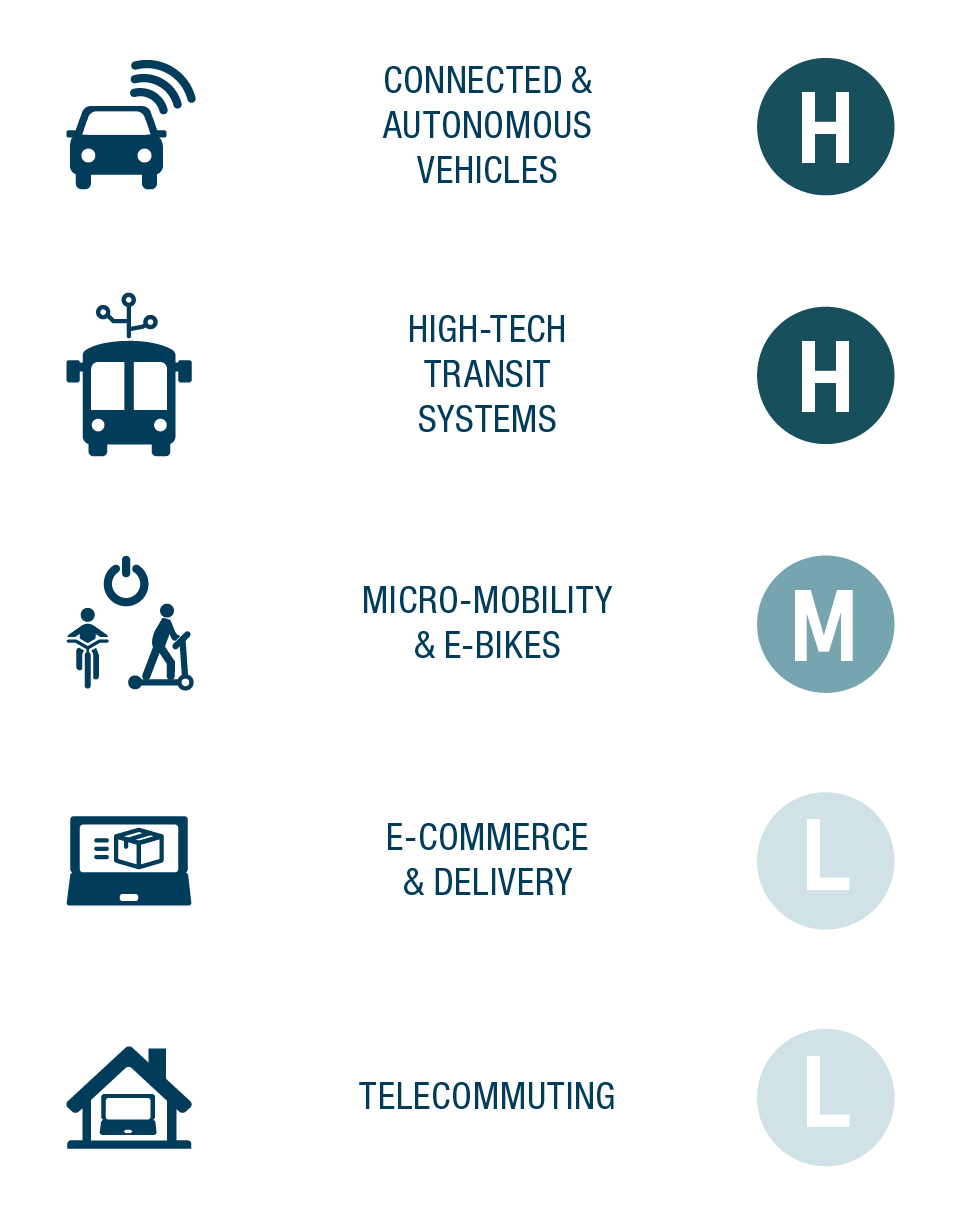
High Automation Scenario
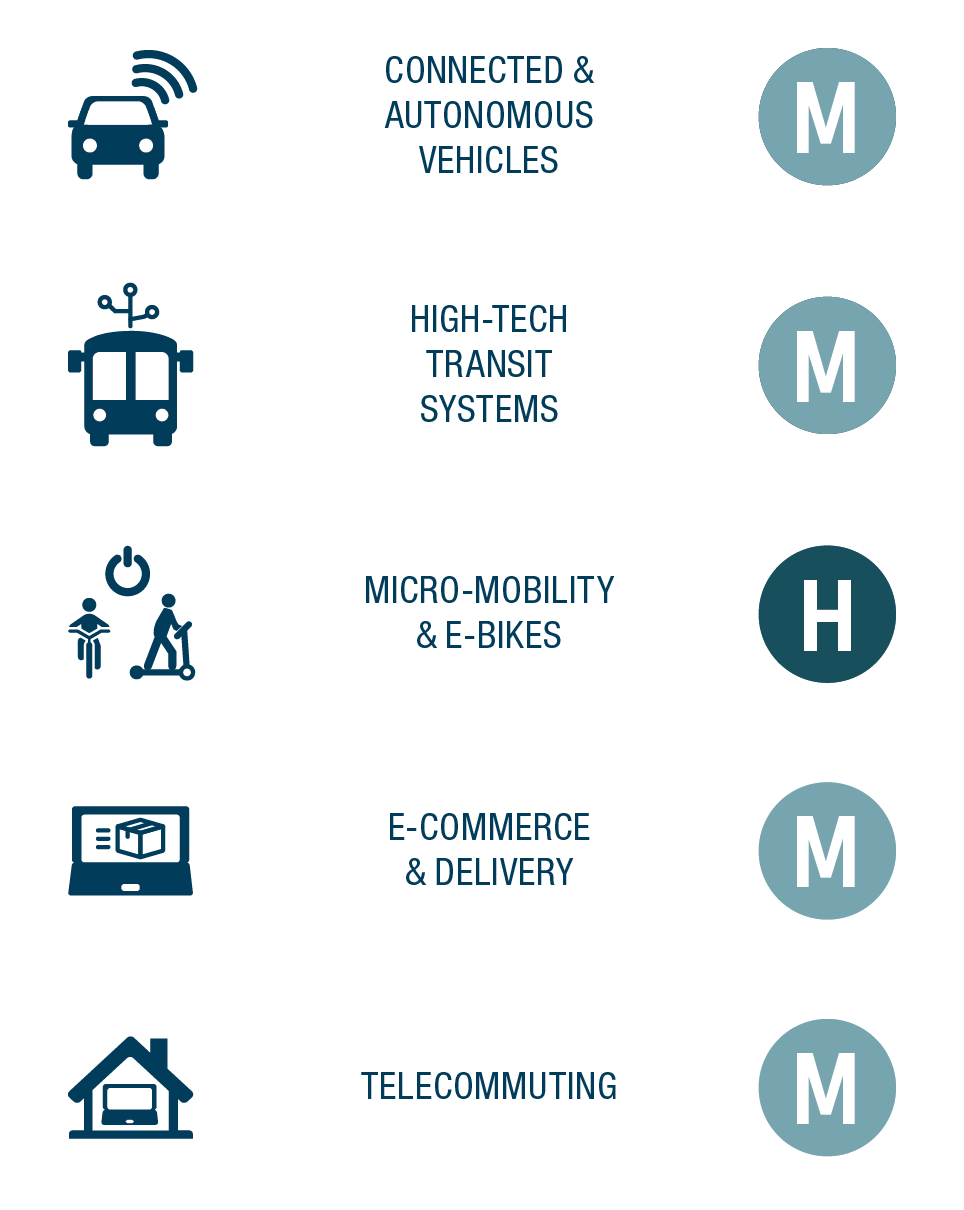
High Shared-Mobility Scenario
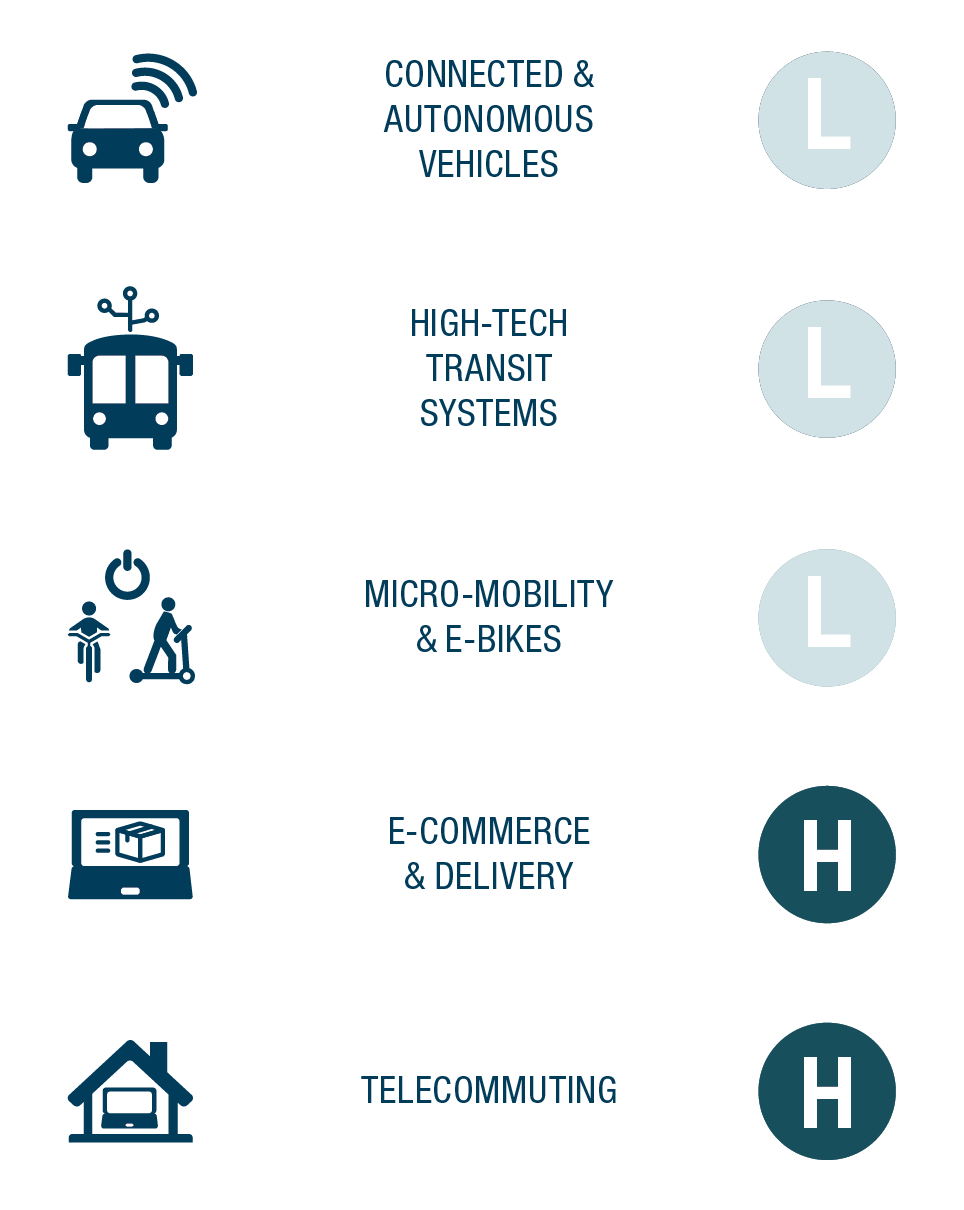
High E-Living Scenario
Technical Analysis
With ranges of implementation determined, WFRC determined how to reflect the scenarios within the travel demand model. Often, the model did not have a specific functionality to reflect the differing impact of the external forces. For instance, there is no specific input for e-commerce and delivery. However, several “dials” within the model can be adjusted to reflect the totality of e-commerce and delivery effects. A memo is forthcoming documenting source material and explaining assumptions and “dials” adjusted to reflect the external forces impact on the travel demand model.
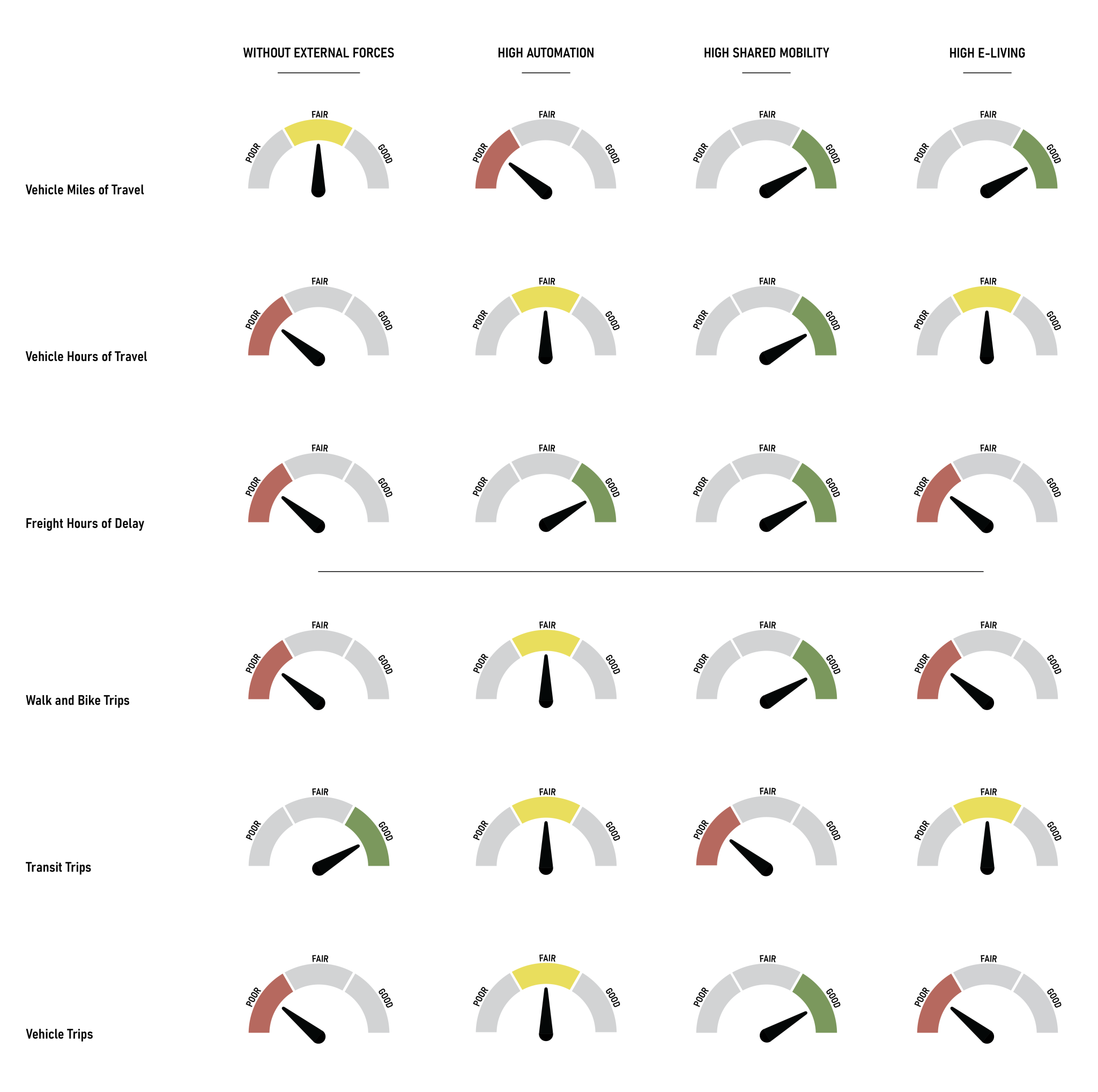
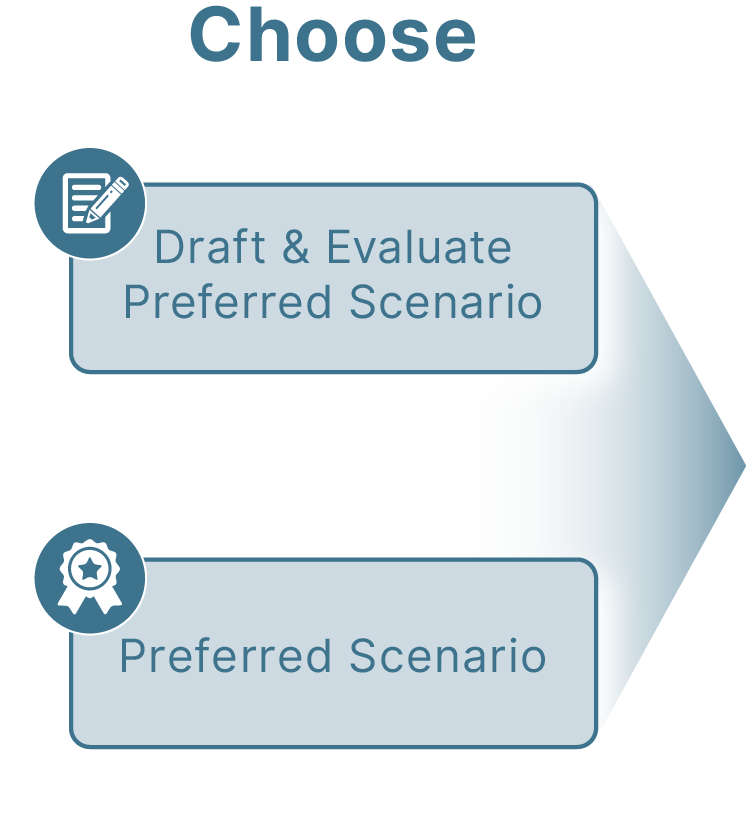
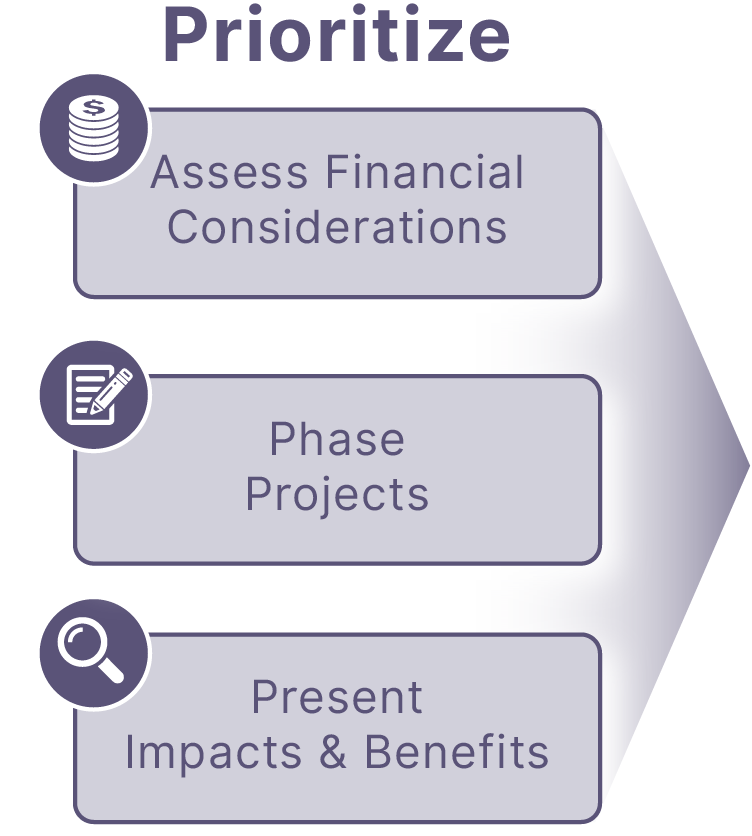
Explore the RTP Development Process

Contact
For additional information, please contact:

Jory Johner
Director of Long-Range Planning


